Gypsum Plaster – What It Is, Benefits & Cost in Bangalore
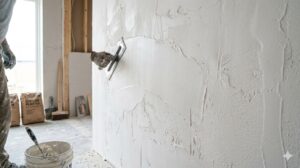
If you are building or renovating a home in Bangalore — whether near Whitefield, Marathahalli, Electronic City, or Sarjapura Road — one question comes up on every construction site: should I use gypsum plaster or cement plaster for my walls and ceilings?
This guide answers every question you have about gypsum plaster — what it is, how it works, its cost, drying time, durability, and why thousands of homeowners across Bengaluru choose N.S Plaster of Paris as their trusted supplier and applicator.
What Is Gypsum Plaster and How Is It Used in Construction?
Gypsum plaster is a white cementing material made by partially or fully dehydrating the mineral gypsum (calcium sulphate dihydrate, CaSO₄·2H₂O). When mixed with water and spread over walls or ceilings, it rehydrates and hardens into a smooth, strong surface that is ready for paint or decorative finishes.
In construction, gypsum plaster is used for:
- Internal wall finishing (replacing traditional sand-cement plaster)
- Ceiling surfaces and false ceiling bases
- Decorative cornices and moulding
- Skim coating over concrete and masonry surfaces
- Fire-rated wall assemblies in commercial and residential buildings
Unlike traditional cement-based products, this wall finish does not require curing with water. It sets and hardens entirely through a chemical reaction, making it faster and less labour-intensive to apply on site.
According to the Indian Green Building Council (IGBC), gypsum-based products are increasingly recommended in sustainable construction projects across India because of their lower carbon footprint compared to cement-based alternatives.
Gypsum Plaster vs Cement Plaster: Which Is Better for Your Walls?
This is the most common debate on construction sites in Bangalore today. Let’s settle it with a clear, side-by-side comparison.
Key Differences at a Glance
| Feature | Gypsum Plaster | Cement Plaster |
|---|---|---|
| Setting Time | 25–40 minutes | 24–48 hours |
| Curing Required | No | Yes (7–21 days) |
| Surface Finish | Smooth, paint-ready | Rough, needs putty |
| Shrinkage / Cracks | Minimal | Prone to cracking |
| Weight | Lightweight | Heavy |
| Fire Resistance | High | Moderate |
| Eco-Friendliness | High | Moderate |
| Cost per sq. ft. | ₹25–₹45 | ₹18–₹35 |
| Suitable for Exteriors | No | Yes |
Is gypsum plaster better than cement plaster? For internal walls and ceilings, yes — the finish it produces is smoother, the setting is faster, and the crack resistance is far superior. Cement plaster, however, remains the right choice for exterior walls and zones exposed to heavy or direct moisture.
What Are the Advantages of Using Gypsum Plaster?
Homeowners and contractors across Bengaluru are making the switch for good reason. Here are the core advantages of this interior plastering solution:
1. Faster Project Completion
Gypsum plaster sets within 25–40 minutes and can be painted over within 3–5 days. Compare this to cement plaster, which demands 21 days of wet curing before you can think about painting. For apartments near ITPL, Whitefield, or KR Puram — where timelines are tight — this saving is significant.
2. Superior Surface Finish
This wall finish produces a flat, smooth, paint-ready surface. That means you save on putty costs and labour. Many builders in Electronic City and Sarjapura are now applying a direct primer coat over the dried surface without any wall putty at all.
3. Crack Resistance
One of the most valued advantages of gypsum plaster is its near-zero shrinkage during drying. Cement plaster shrinks as it sets, often causing hairline cracks within months. This plastering compound expands slightly during the setting phase, locking into the surface and dramatically reducing cracking.
4. Thermal and Acoustic Insulation
Gypsum has natural thermal insulating properties that help maintain comfortable indoor temperatures — a real benefit in Bangalore’s warm climate. The material also absorbs sound better than cement alternatives, which is valuable for apartments in dense localities like AECS Layout, Hoodi, and Marathahalli.
5. Lightweight Construction
This plastering solution weighs significantly less than cement plaster. The reduced dead load on the building structure is a critical factor in high-rise construction projects in areas like Bellandur, Sarjapura Road, and Carmelaram.
6. Fire Resistance
Gypsum naturally contains chemically combined water (approximately 21% by weight). In a fire, this water is released as steam, slowing the spread of flames and protecting structural elements behind the wall. That is why gypsum plaster is widely specified in fire-rated wall assemblies.
7. Environmentally Friendly
The production of this material emits far less CO₂ than the manufacture of Portland cement. For green-certified buildings and eco-conscious homeowners in Bangalore, that is a meaningful advantage.
📌 Pro Tip from NS Plaster of Paris: For best results, always apply gypsum plaster on clean, lightly dampened surfaces. A surface that is too dry will absorb moisture too quickly and cause uneven setting.
What Is the Cost of Gypsum Plaster per Square Foot in Bangalore?
Cost is the first question on any homeowner’s mind. Here is a realistic 2026 pricing breakdown for this wall finish in Bangalore:
| Work Type | Estimated Cost (per sq. ft.) |
|---|---|
| Wall plastering — material + labour | ₹30 – ₹45 |
| Ceiling plastering | ₹35 – ₹50 |
| Gypsum board partition walls | ₹80 – ₹120 |
| Skim coat over concrete surface | ₹18 – ₹28 |
Final pricing depends on several factors:
- Surface condition — Rough or uneven walls require more material and labour
- Coat thickness — Standard is 12–15 mm for walls
- Location — Accessibility affects labour charges in areas like Dommasandra, Haralur, and outer Sarjapura
- Brand chosen — Premium brands cost slightly more but deliver more consistent results
For a precise quote tailored to your project in Marathahalli or Sarjapura, call N.S Plaster of Paris directly at 098867 09716.
How Long Does Gypsum Plaster Take to Dry?
This is one of the most practically important questions on any active construction site.
The drying process happens in stages:
- Initial set: 25–40 minutes after application
- Hard set: 2–3 hours (surface can be touched without damage)
- Paint-ready surface: 3–5 days under normal Bangalore weather conditions
Compare this to cement plaster, which needs a minimum of 21 days of curing plus additional drying time before painting can begin.
Key factors that affect drying time for this wall finish:
- Humidity: Bangalore’s monsoon (June–September) can extend drying time. Ensure adequate ventilation in rooms being plastered during heavy rains.
- Coat thickness: Always apply within the recommended 12–15 mm range — thicker coats dry unevenly.
- Base surface temperature: Cold or overly damp surfaces slow the setting reaction.
- Air circulation: Good cross-ventilation speeds up the process significantly.
✅ Key Takeaway: In Bangalore’s dry season — October through February, when construction peaks across Marathahalli, Whitefield, and Electronic City — gypsum plaster can reach a paint-ready surface in as little as 3 days.
Is Gypsum Plaster Waterproof?
This is a question that deserves a direct and accurate answer, because getting it wrong leads to costly repairs.
No — standard gypsum plaster is not waterproof.
The material is naturally hygroscopic, meaning it absorbs moisture from its surroundings. In persistently wet conditions, untreated wall plaster of this type can soften, swell, or deteriorate over time.
This means it should NOT be applied on:
- External walls
- Bathrooms and wet areas
- Zones below the damp-proof course (DPC)
- Kitchen walls behind sinks or wet counters
However, moisture-resistant variants (water-resistant board plaster) are available for areas with moderate humidity. These are treated with additives that improve resistance to moisture absorption, though they still should not be used in direct-water-contact zones.
For moisture-prone zones in localities like Haralur, Dommasandra, or Carmelaram — where groundwater levels can be higher — always use cement plaster or tiles on the lower sections of walls, and reserve gypsum plaster for upper wall areas and ceilings.
How Durable Is Gypsum Plaster Compared to Traditional Plaster?
Durability is a valid concern for property owners in Bangalore who plan to live in their homes for 20–30+ years.
Gypsum Plaster — Durability Profile:
- Expected lifespan: 20–30 years when correctly applied and maintained
- Crack resistance: Excellent (low shrinkage dramatically reduces stress cracks)
- Impact resistance: Moderate (not ideal for garages or heavy-traffic ground-floor zones)
- Moisture resistance: Low (not suitable for wet areas — as covered above)
Traditional Cement Plaster — Durability Profile:
- Expected lifespan: 20–25 years
- Crack resistance: Moderate (prone to hairline cracking during the drying phase)
- Impact resistance: High (denser, harder surface)
- Moisture resistance: High
Verdict: For interior walls and ceilings in residential apartments and commercial spaces — the majority of construction work in areas like Marathahalli, Hoodi, AECS Layout, and Sarjapura Road — gypsum plaster is every bit as durable as traditional plaster. Its superior crack resistance often makes it more durable in practice, because it prevents the micro-cracks that allow moisture ingress and long-term wall damage.
Can Gypsum Plaster Be Applied Directly on Brick Walls?
Yes — this plastering material can be applied directly on brick walls, but a few important conditions must be met first.
Surface Preparation Checklist for Brick Walls:
- Clean the surface — Remove dust, oil, grease, efflorescence, and any loose material
- Dampen the wall — Lightly spray with water before application; not soaked, just moistened
- Apply a bonding agent — On smooth or dense surfaces, a bonding compound aids adhesion
- Check for moisture ingress — Ensure no active seepage exists before application
- Interior walls only — Never apply this finish on external brick surfaces
For old brick walls common in pre-2000 constructions in older parts of East Bengaluru, a POP bonding agent applied prior to the wall plaster significantly improves adhesion and long-term durability.
Which Is the Best Gypsum Plaster Brand for Home Construction in Bangalore?
Several manufacturers supply quality products across India. Here are the most trusted options available in Bangalore in 2026:
| Brand | Key Product | Best For |
|---|---|---|
| Saint-Gobain Gyproc | Gyproc Gypsum Plaster | Premium residential & commercial |
| Birla White | Birla White Gypsum Plaster | Mid-range residential |
| USG Boral | Structo-Lite | Large commercial projects |
| Knauf | Knauf MP75 Machine Plaster | Machine-applied finishing |
| JK Cement | JK Wall Putty + Plaster | Budget residential |
For most homeowners and contractors in Bangalore, Saint-Gobain Gyproc and Birla White are the top choices for hand-applied work due to their consistent quality, wide availability, and strong technical support.
You can also explore gypsum board solutions — a closely related product — on the N.S Plaster of Paris Gypsum Board page to understand the full range available for your project.
Does Gypsum Plaster Require Wall Putty Before Painting?
This is one of the most overlooked advantages of this plastering solution.
In most cases, gypsum plaster does NOT require wall putty before painting.
Gypsum plaster produces a naturally smooth, uniform surface. When the application is done correctly and the finish is allowed to dry fully (3–5 days), the wall is ready for a coat of primer directly, followed by your chosen paint.
Wall putty may still be needed when:
- Small surface defects, pinholes, or trowel marks are visible after drying
- You are targeting a very high-gloss paint finish
- The surface was applied unevenly or with excessive coat thickness
- You want additional whiteness as a base for lighter paint colours
For most standard paint finishes — interior emulsion or premium texture paints — a direct prime-and-paint approach over fully cured wall plaster delivers excellent results and saves meaningful cost and time.
💡 Cost Saving Tip: Skipping wall putty on plastered walls can save approximately ₹8–₹15 per square foot. For a 1,000 sq. ft. home in Bangalore, that is a direct saving of ₹8,000–₹15,000 on your finishing budget.
Why N.S Plaster of Paris Is Considered the Best Gypsum Plaster Supplier in Bangalore
When Bangalore homeowners and contractors search for a reliable gypsum plaster supplier and applicator, one name consistently rises to the top — N.S Plaster of Paris.
Who Are N.S Plaster of Paris?
N.S Plaster of Paris is a leading supplier and applicator of gypsum plaster, POP false ceilings, gypsum boards, GI ultra ceilings, cornice moulding, tiles, and interior hardware in Bangalore. With two strategically located branches serving the city’s fastest-growing corridors, they have built a strong reputation for quality products, expert workmanship, and honest pricing.
Two Branches — Serving All of Bangalore
NS Plaster of Paris serves customers across Bangalore from two branches:
- Marathahalli Branch — Outer Ring Road: Serving Whitefield, Hoodi, KR Puram, AECS Layout, Brookefield, Kundalahalli, Doddanekundi, Thubarahalli, Varthur, Mahadevapura, and the entire ORR corridor
- Sarjapura Hobli Branch: Serving Carmelaram, Haralur, Dommasandra, Electronic City, Bellandur, and the rapidly growing Sarjapura Road stretch
This dual-branch presence means whether you are renovating a villa near Whitefield Tech Park or finishing a new apartment near Electronic City Phase 2, N.S Plaster of Paris can serve you without delay.
What Makes Them the Best Choice?
1. Expert Application Team The N.S Plaster of Paris team has years of hands-on experience applying gypsum plaster on residential, commercial, and institutional projects across Bengaluru. They understand the nuances of surface preparation, mix ratios, and application technique that separate a long-lasting wall finish from one that cracks or peels within a year.
2. Genuine, BIS-Certified Products All products supplied are from certified manufacturers and conform to IS 2547 standards. You never have to worry about substandard material reaching your construction site.
3. Complete Interior Solutions Under One Roof
Beyond gypsum plaster, they offer:
- POP False Ceiling — Elegant ceiling designs for living rooms, bedrooms, and commercial spaces
- POP Wall Finishes — Decorative and smooth wall treatments
- GI Ultra Ceiling Systems — Durable grid ceiling solutions
- Cornice Moulding — Decorative trims and borders
- Tiles — Floor and wall tile supply
- Hardware — Construction hardware and accessories
- Gypsum Board Supply — Premium boards for partitions and ceilings
4. Trusted by Local Builders Browse the N.S Plaster of Paris Gallery to see completed projects across Marathahalli, Sarjapura, and wider Bengaluru. Read verified client testimonials from homeowners and builders along the ORR corridor.
5. Transparent Pricing and Reliable Stock Both branches maintain sufficient stock of gypsum plaster and related materials to fulfil orders without delay — critical on active construction sites where work cannot pause.
Step-by-Step Application Process for Gypsum Plaster
Understanding how this finish is applied helps you supervise your contractor and ensure quality at your site.
Step 1: Surface Preparation
- Remove dust, loose material, and efflorescence
- Chip out major undulations exceeding 12 mm
- Lightly dampen the surface
Step 2: Apply Bonding Agent (if required)
- Use POP bonding primer on smooth concrete
- Allow to dry per manufacturer instructions
Step 3: Mix the Material
- Add the powder to clean water (not the other way around)
- Mix to a smooth, lump-free creamy consistency
- Use the full mix within 25–30 minutes
Step 4: Apply First Coat
- Apply with a steel trowel using long, sweeping strokes
- Maintain 8–12 mm thickness for the base coat
- Level with a screed rod or aluminium float
Step 5: Apply Finishing Coat
- Apply when the first coat begins to stiffen but has not fully dried
- Keep total thickness within 12–15 mm
- Finish with a damp sponge float for a smooth surface
Step 6: Allow to Cure
- Allow 3–5 days drying time before priming
- Maintain good ventilation; avoid direct sunlight on fresh plaster
Common Mistakes to Avoid
Even premium material underperforms when applied incorrectly. Watch out for these on-site errors:
❌ Mixing too much at once — Gypsum plaster sets fast. Only mix what can be applied within 25–30 minutes.
❌ Applying on overly wet walls — A surface that is too wet will prevent proper adhesion.
❌ Exceeding recommended thickness — Coats over 20 mm in a single pass are likely to crack or sag.
❌ Using the wrong product for the substrate — Not all gypsum-based plasters suit all surfaces. Ask your N.S Plaster of Paris expert for the right recommendation.
❌ Painting before full dry — Priming over incompletely dried plaster traps moisture and causes peeling and blistering.
Gypsum Plaster and Bangalore’s Construction Boom
Bangalore has been the epicentre of India’s urban construction boom for over two decades. With IT corridors expanding from Whitefield to Sarjapura Road, new residential towers rising near Haralur and Dommasandra, and premium villa projects dotting the Outer Ring Road between Marathahalli and KR Puram, demand for quality interior wall finishing solutions has never been stronger.
Local landmarks like Embassy Tech Village in Bellandur, the ITPL campus in Whitefield, and the Outer Ring Road flyover network anchor the neighbourhoods where thousands of homes are finished every year. The builders and interior contractors working around these corridors increasingly prefer gypsum plaster for internal wall finishing — and they increasingly source it from N.S Plaster of Paris.
Also Refer Portland Cement Association — Concrete Finishing
Frequently Asked Questions
Q: Can I use this plastering material in my bathroom? No. Standard gypsum plaster is not suitable for bathrooms or any wet areas. Use tiles or waterproof cement plaster in those zones.
Q: Is it suitable for Bangalore’s climate? Yes. Bangalore’s predominantly dry climate — especially from October to May — is ideal for application. During the monsoon, ensure adequate ventilation and avoid plastering in conditions of very high ambient humidity.
Q: How do I fix cracks in existing wall plaster? Small hairline cracks can be filled with a diluted gypsum-based crack filler. Larger cracks may indicate a structural issue and should be assessed professionally. Contact the N.S Plaster of Paris team for an on-site assessment.
Q: What is the standard thickness for gypsum plaster? The standard thickness for internal walls is 12–15 mm. For ceilings, a slightly thinner coat of 10–12 mm is typically recommended.
Q: Is there a difference between gypsum plaster and Plaster of Paris? Yes. Plaster of Paris (POP) is a finely ground, faster-setting form of gypsum used for decorative applications — false ceilings, cornices, and mouldings. Gypsum plaster is a coarser product designed specifically for wall and ceiling surface finishing. Read more in our detailed Plaster of Paris ceiling blog.
Contact N.S Plaster of Paris Today
Whether you are planning a new build, renovating an existing home, or replacing damaged wall surfaces, the N.S Plaster of Paris team is ready to help.
Business Name: N.S Plaster of Paris | PoP False Ceiling | PoP Walls | Gypsum Board | GI Ultra Ceiling | PoP Interior & Exterior | Bangalore
Marathahalli Branch (Outer Ring Road): Shop No.2, S.S Chambers, 394/1, Outer Ring Rd, Aswath Nagar, Marathahalli, Bengaluru, Karnataka 560037
Sarjapura Branch: Ground Floor, No. 1089/1, Hobli, Sarjapura, Karnataka 562125
Phone: 📞 098867 09716 | 096119 29716
Website: 🌐 www.nsplasterofparis.com
👉 Get a Free Quote — Contact Us Now
N.S Plaster of Paris — Bangalore’s trusted name in gypsum plaster, POP false ceilings, gypsum boards, and complete interior solutions. Serving Marathahalli, Whitefield, KR Puram, AECS Layout, Hoodi, Sarjapura, Carmelaram, Haralur, Dommasandra, and Electronic City.