Plaster – Types, Uses & Which One is Right for Your Home
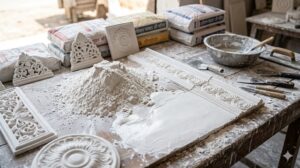
Whether you are building a new home near Whitefield, renovating a flat in Marathahalli, or completing a commercial space near Electronic City — the wall finishing stage defines how your interiors look and perform for decades to come.
Choosing the right plaster, the right method, and the right partner is everything. At N.S PoP, we have guided thousands of homeowners, builders, and interior designers across Bangalore through exactly this decision — with honest advice, quality materials, and skilled on-site execution.
This expert guide covers every major question about plaster and wall finishing in 2026 — types, costs, drying times, durability, and why N.S PoP is Bangalore’s most trusted name in this field.
What Is Plaster and How Is It Used in Construction?
Plaster is a building material applied to walls and ceilings as a wet mixture that hardens into a smooth, durable surface. It is the layer between your raw structural walls and the painted finish you see every day.
In construction, this surface coating serves multiple critical roles:
It conceals gaps, joints, and imperfections in brick or concrete substrates. It creates a flat, even base that accepts paint, wallpaper, or tiles cleanly. It adds fire resistance and improves the thermal comfort of rooms. It contributes to sound dampening between floors. It protects the structural core from moisture infiltration, dust, and daily wear.
The material is typically applied in two coats — a base or render coat that builds thickness and adhesion, followed by a smooth finish coat that creates the final surface. Wall condition, substrate type, and the intended use of the room determine which product is right for each situation.
In Bangalore’s fast-growing construction corridors — from KR Puram and Hoodi to Carmelaram and Dommasandra — this wall finishing step is non-negotiable. Builders along Outer Ring Road and Sarjapura Road consistently rely on quality plaster to deliver interiors that look premium and hold up for years.
What Are the Different Types of Plaster Available?
Knowing your options helps you make the smartest decision for each part of your home or building. Here is a practical breakdown of the main types of plaster used in Bangalore today:
Gypsum Plaster
Made from calcium sulphate hemihydrate, gypsum plaster is today’s most popular choice for interior walls and ceilings. Its key advantages are a naturally smooth finish, faster drying, and no requirement for water curing — saving significant time and cost on every project.
Homeowners in AECS Layout, Brookefield, and Kadubeesanahalli consistently prefer this option for its premium finish and quick turnaround.
Cement Render
A blend of Portland cement, sand, and water, cement render is stronger and far more moisture-resistant than gypsum-based products. It is the go-to solution for exterior walls and wet areas like bathrooms and utility rooms.
In localities like Varthur and Doddanekundi where seasonal moisture can be heavy, cement render on external surfaces provides essential long-term protection.
Lime Render
One of the oldest wall coating materials in history, lime render is made from calcium hydroxide and sand. It is breathable, naturally flexible, and resistant to mould growth. While less common in modern builds, it remains relevant in heritage restoration work.
PoP — Decorative Wall and Ceiling Compound
PoP is a fine white compound made from gypsum that sets quickly when mixed with water. Unlike structural plaster, PoP is used primarily for decorative finishes — false ceilings, cornices, ornamental mouldings, and textured wall surfaces.
To explore stunning PoP ceiling designs for your home, visit our PoP false ceiling page in Marathahalli, Bangalore.
Ready-Mix Wall Finish
Factory-blended and packaged in bags, ready-mix products are pre-proportioned for consistency. They eliminate on-site mixing errors and are particularly valuable on large projects where uniform quality across hundreds of square metres is required.
| Material | Best Application | Drying / Setting Time | Water Curing Required? |
|---|---|---|---|
| Gypsum Plaster | Interior walls & ceilings | 1–2 days | No |
| Cement Render | Exterior walls, wet areas | 7–28 days | Yes |
| PoP | Decorative ceilings & features | 20–30 minutes | No |
| Lime Render | Heritage & restoration | 2–7 days | Minimal |
| Ready-Mix | Large-scale projects | Varies by product | Depends on base |
Which Is Better: Gypsum Plaster or Cement Render?
This is the most frequently asked question from homeowners in Marathahalli, Sarjapura, and the surrounding areas. The honest answer: both are excellent — but they serve different purposes.
When to Choose Gypsum Plaster
You are finishing interior walls and ceilings. You want a perfectly smooth, paint-ready surface with minimal sanding. You need faster project completion — no water curing means earlier handover. You want better thermal comfort and natural sound dampening indoors. Projects in Panathur, BEML Layout, and Thubarahalli benefit greatly from its fast, clean results.
When to Choose Cement Render
The surface faces outdoor weather exposure. The room is a bathroom, kitchen, or utility area with high moisture. You need a harder, more impact-resistant base layer. The project is commercial or industrial in nature.
The most effective approach used by experienced Bangalore contractors: cement render for all exterior and wet-area surfaces, gypsum plaster for all interior living spaces. This combination delivers the best of both products.
For gypsum board solutions — ideal for modern partitions and ceiling systems — explore our gypsum board dealer page in Bangalore.
How Much Does Plastering Cost Per Square Foot in Bangalore?
Wall finishing costs in Bangalore in 2026 vary by material type, wall condition, site accessibility, and project scale. Here is a practical market-rate guide:
| Finishing Type | Approximate Cost (Per Sq. Ft.) |
|---|---|
| Gypsum Plaster — Interior | ₹18 – ₹35 |
| Cement Render — Exterior | ₹15 – ₹30 |
| PoP Wall Finish | ₹20 – ₹40 |
| PoP False Ceiling | ₹60 – ₹120 |
| GI Ultra Ceiling System | ₹55 – ₹100 |
| Cornice Moulding | ₹80 – ₹150 per linear foot |
These figures are indicative estimates based on current Bangalore market rates. Your actual cost depends on site-specific factors including wall condition and accessibility. For an accurate, no-obligation quote for your home or project near Marathahalli, Whitefield, Haralur, or Dommasandra — contact N.S PoP at 098867 09716 or 096119 29716.
How Long Does Plaster Take to Dry Completely?
Timeline management is a top priority for anyone running a construction or renovation schedule. Here is what to expect from each type of plaster:
Gypsum Plaster Drying Time
Gypsum plaster sets within 25–30 minutes of application and is dry to touch within a few hours. Under normal indoor conditions in Bangalore, it is fully cured and ready for paint within 1–2 days. No water curing is required — a significant time and cost saving compared to cement-based alternatives.
Cement Render Drying Time
Cement render requires mandatory water curing for 7 to 21 days after application. Full structural strength develops between 21 and 28 days. Skipping or shortening the curing phase leads directly to surface cracks and delamination — one of the most common and costly rectification issues on Bangalore construction sites.
PoP Setting Time
PoP sets within 20–30 minutes, making it ideal for intricate decorative work that demands speed and precision. Its fast setting means each section must be shaped quickly — which is exactly why skilled, experienced application matters enormously.
Expert Tip from N.S PoP: During Bangalore’s peak summer months, protect freshly applied wall coatings from direct sunlight and strong air-conditioning drafts. Rapid surface drying before the material has fully bonded is a leading cause of hairline cracking on plaster walls.
What Are the Advantages of Plastering Walls?
A quality wall finish does far more than make a room look neat. Here are the structural and functional benefits that make plastering walls an essential investment:
A Clean, Paintable Surface
Without a proper wall coating, paint applied directly to raw brick or concrete absorbs unevenly, looks patchy, and deteriorates far faster. A smooth, sealed surface is the foundation of every great painted interior finish.
Long-Term Structural Protection
A well-applied coat shields the wall substrate from physical impact, abrasion, and surface erosion — adding years to the life of your walls without requiring additional maintenance costs.
Thermal Comfort
Gypsum-finished walls have natural insulating properties. Homes in Bellandur, Yemalur, and Thubarahalli that use gypsum for interior surfaces consistently report cooler rooms in summer — directly reducing air-conditioning load and energy bills.
Fire Safety
Gypsum is inherently fire-resistant. Walls finished with gypsum-based products provide a meaningful additional barrier in the event of fire — an important safety factor for residential apartments and commercial buildings alike.
Sound Control
Dense wall finishes reduce sound transmission between rooms and floors. This benefit is particularly appreciated in apartment complexes near Hoodi and KR Puram, where residents expect privacy and quiet.
Hygienic, Easy-Clean Surfaces
Smooth, sealed walls are significantly easier to maintain and far less likely to harbour dust, mould, or allergens than rough or unfinished surfaces — an important consideration for families in Bangalore’s humid eastern suburbs.
To see PoP wall finishes in real Bangalore homes, visit our PoP walls in Marathahalli page.
Is Plaster Waterproof and Suitable for Bathrooms?
Standard gypsum plaster is not waterproof and must never be used in bathrooms, kitchens, or utility rooms without a dedicated waterproofing barrier applied underneath.
Bathroom Wall Recommendations
Cement render remains the industry standard for bathroom walls due to its inherent moisture resistance. After the render coat has cured, a waterproofing membrane or additive layer must be applied before tiling begins. This three-layer system — render, waterproofing, tiles — is the correct and proven method for any wet room in Bangalore’s climate.
Moisture-Resistant Gypsum Board
Modern construction in Whitefield and Electronic City increasingly uses moisture-resistant green-board panels for bathroom walls. These engineered boards tolerate humid environments and provide a stable, reliable base for tiled finishes.
For professional tiling solutions throughout Bangalore, explore our tiles in Marathahalli, Bangalore page.
Can Plaster Be Applied Directly to Brick Walls?
Yes — and this is standard practice across Bangalore’s villa and independent house construction zones, particularly in Sarjapura, Dommasandra, and Haralur Road. The key is correct surface preparation before any plaster goes on.
Correct Process for Brick Surfaces
Step 1 — Clean the substrate. Remove all dust, oil, and loose particles. Rake mortar joints to a minimum depth of 10mm to maximise adhesion.
Step 2 — Wet the surface. Thoroughly dampen the brick before applying cement render. Dry brick absorbs moisture from the mix too rapidly, preventing proper bonding and leading to cracking.
Step 3 — Apply the render coat. This base layer builds depth and adhesion. Score the surface with a comb tool before it fully sets to create a mechanical key for the finish coat.
Step 4 — Apply the finish coat. Level and smooth to the desired surface quality. For interior rooms, a thin gypsum skim coat over the cement base delivers the smoothest, most paint-ready result.
Step 5 — Cure properly. Cement render requires a minimum 7 days of water curing. Gypsum finish coats do not need curing.
How Long Does Plaster Last Before It Needs Repair?
Correctly applied wall coatings are among the most durable elements in any building. Here is a realistic lifespan guide:
| Material | Expected Lifespan |
|---|---|
| Gypsum Plaster — Interior | 15 – 25 years |
| Cement Render — Exterior | 10 – 20 years |
| PoP — Decorative Features | 10 – 20 years |
| Lime Render | 20 – 50 years |
Lifespan is strongly influenced by application quality, moisture exposure, structural movement, and ongoing maintenance. Key warning signs that repair is needed: visible hairline cracks, bulging or hollow-sounding sections when tapped, damp staining, or paint that refuses to adhere correctly to the wall surface.
According to This Old House, moisture infiltration is the single most common cause of premature wall surface failure. An annual inspection — particularly after Bangalore’s monsoon season — helps catch small issues before they become expensive problems.
What Is the Best Plaster for Interior Walls and Ceilings?
For residential and commercial interiors across Bangalore in 2026, gypsum plaster remains the top-performing choice for most applications. Here is why it leads the field:
No curing needed — saving water, time, and labour. Naturally smoother than cement-based finishes — less preparation before paint. Inherently fire-resistant for added safety. Better thermal insulation — particularly valuable in Bangalore’s warmer months. Faster project handover — critical for developers delivering apartments in Whitefield, Panathur, and Mahadevapura.
For decorative ceilings, PoP remains unmatched. PoP false ceilings allow for curves, recessed lighting troughs, coves, and ornate detailing that rigid board systems cannot replicate.
For GI Ultra ceiling systems — a modern, fast-install framework ideal for commercial spaces — see our GI Ultra ceiling page in Marathahalli.
For decorative cornices and moulding details, see our cornice moulding in Marathahalli page.
Why N.S PoP Is Considered the Best Plaster Partner in Bangalore
Choosing the right contractor and supplier matters just as much as selecting the right material. Here is why thousands of homeowners, interior designers, and builders across Bangalore return to N.S PoP for every project.
Deep, On-Ground Experience
N.S PoP has built its reputation through consistent quality, honest on-site advice, and skilled application across hundreds of residential and commercial projects spanning all of Bangalore’s major construction zones.
Two Conveniently Located Branches
N.S PoP serves customers across Bangalore from two branches — Marathahalli on Outer Ring Road serving Whitefield, Hoodi, KR Puram, and AECS Layout, and Sarjapura Hobli serving Carmelaram, Haralur, Dommasandra, and Electronic City.
This dual-branch model means faster material supply, reduced lead times, and reliable on-site support across East and South-East Bangalore.
A Complete Interior Finishing Product Range
Unlike general hardware retailers, N.S PoP specialises entirely in interior surface systems. The full product range includes:
PoP False Ceilings — elegant designer ceiling finishes for living and dining areas. PoP Wall Finishes — smooth, durable interior surfaces ready for any paint or wallpaper. Gypsum Boards — lightweight partitions and ceiling systems for modern interiors. GI Ultra Ceilings — commercial-grade framework systems for faster ceiling installation. Cornice Mouldings — decorative border and edge detailing for refined interiors. Tiles — bathroom, kitchen, and flooring solutions from trusted brands. Hardware — all supporting products for complete interior finishing.
Explore the full range on the N.S PoP hardware page in Marathahalli.
Trusted Across Bangalore’s Landmark Zones
Projects completed by N.S PoP span the length and breadth of East Bangalore — from homes near Marathahalli Bridge and Kundalahalli Gate to apartments close to Sarjapura Junction and villa communities approaching Dommasandra Circle. Builders near Mahadevapura, ITPL, and Yemalur consistently return for repeat projects.
Transparent Pricing, No Surprises
Every customer receives a clear, itemised quote before work begins — whether the project is a single room or a multi-floor apartment complex. No hidden charges, no last-minute additions.
See Real Work. Read Real Reviews.
Browse the N.S PoP project gallery to see completed interior projects across Bangalore. Read genuine customer feedback on the testimonials page.
Professional Application Tips from N.S PoP’s Experts
Always Get the Mix Ratio Right
The water-to-compound ratio is critical in any plaster application. Too much water weakens the set; too little causes cracking. For gypsum products, always add the powder to water — never the reverse.
Prime the Surface Before Applying
On concrete or very smooth surfaces, apply a PVA bonding primer before the wall coating. This step dramatically improves adhesion and prevents long-term delamination.
Work in Sections
Gypsum-based products have a short working window. Apply in manageable sections and never attempt to rework material that has already begun to set.
Never Skip Curing for Cement Render
The minimum curing period is 7 days with twice-daily wetting. Ideal curing runs to 21 days. Projects that rush this stage almost always see surface cracking within 12 months.
Invest in Quality Materials
The price gap between standard and premium wall coating materials is small. The cost of rectifying a failing surface — stripping back, reapplying, repainting — is enormous. Quality materials from verified suppliers are always the better investment.
As noted by Portland Cement Association, proper surface preparation and correct material selection are the two most decisive factors in achieving a long-lasting wall finish.
Maintaining Your Wall and Ceiling Surfaces
Once your surfaces are complete, simple routine care extends their life significantly:
Inspect annually — check for hairline cracks after monsoon season and address them before moisture penetrates deeper. Fix water sources immediately — a leaking pipe or roof is the fastest way to destroy a quality wall coating. Repaint every 4–6 years — fresh paint seals and protects the surface beneath. Handle PoP decorative elements with care — avoid knocks and impacts near ceiling cornices and mouldings. Clean gently — a lightly damp cloth is sufficient for most wall surfaces. Abrasive pads permanently damage the finish.
For long-term care of your PoP ceiling, read our detailed guide on PoP ceiling design and maintenance.
Frequently Asked Questions
Q: Is gypsum plaster suitable for Bangalore’s humid climate? Yes — for interior surfaces. Gypsum performs very well in Bangalore’s indoor environment. For exterior walls and wet rooms, cement render is always the correct recommendation.
Q: How many coats are typically needed? Most interior walls need two coats — a base coat and a finish coat. Walls with significant imperfections may require a third levelling coat before the finish is applied.
Q: Can wall coatings be applied over old paint? No. Old paint must be fully removed before any new surface coating is applied. Paint creates a barrier that prevents proper adhesion, leading to peeling and delamination.
Q: When can I paint after the finish is applied? After gypsum application: wait a minimum of 48 hours, ideally 7 days. After cement render: wait the full 28-day curing period. Painting too early traps moisture and causes bubbling.
Q: Is PoP suitable for exterior walls? No. PoP is not weather-resistant and will rapidly deteriorate when exposed to Bangalore’s rain and humidity. Always use cement render for exterior-facing surfaces.
Contact N.S PoP — Bangalore’s Wall Finishing Experts
Business Name: N.S Plaster of Paris | PoP False Ceiling | PoP Walls | Gypsum Board | GI Ultra Ceiling | PoP Interior & Exterior | Bangalore
Marathahalli Branch: Shop No.2, S.S Chambers, 394/1, Outer Ring Road, Aswath Nagar, Marathahalli, Bengaluru, Karnataka – 560037 Serving: Whitefield, Hoodi, KR Puram, AECS Layout, Kundalahalli, Brookefield, Doddanekundi, Thubarahalli, Munnekollal
Sarjapura Branch: Ground Floor, No. 1089/1, Hobli, Sarjapura, Karnataka – 562125 Serving: Carmelaram, Haralur, Dommasandra, Electronic City, Bellandur, Panathur, Yemalur
Phone: 098867 09716 | 096119 29716 Website: www.nsplasterofparis.com
Contact us today for a free consultation from Bangalore’s most trusted wall finishing experts.
Conclusion: Get the Foundation Right and Everything Follows
From the first render coat on bare brick to the smooth finish that takes paint like a canvas — wall finishing is where construction quality is made or broken. Choosing the right type of plaster, applying it correctly, and working with skilled professionals produces surfaces that are beautiful, durable, and low-maintenance for decades.
N.S PoP brings deep product knowledge, skilled on-site execution, and two strategically located branches across Bangalore to every project — from Marathahalli on Outer Ring Road to Sarjapura near Dommasandra. Whether you are finishing a single apartment or an entire development, the N.S PoP team is ready to help you get it right.
Choose quality materials. Choose skilled application. Choose N.S PoP.
External References:
1. This Old House — How to Repair Plaster Walls: https://www.thisoldhouse.com/
2. Portland Cement Association — Concrete Finishing: https://www.cement.org/
3. Wikipedia — Plaster Overview: https://en.wikipedia.org/wiki/Plaster